
CURRENT ISSUES FOR OUR IRAC COMMUNITY
Why Were Rabbis Detained While Harvesting Olives in the West Bank?
On Wednesday, I was at the Supreme Court, waiting for a hearing on IRAC's petition concerning the lack of core subjects in Haredi schools. But I could hardly concentrate. I was following the deeply disturbing news that dozens of rabbis and activists, including dear friends and colleagues, had been detained by Israeli authorities while helping Palestinian farmers harvest their olives in the West Bank.
The Palestinian farmers they had come to help had been unable to harvest their own olives since October 7, fearing settler violence. The volunteers were there to provide a protective presence as part of the Protect the Harvest initiative, led by Rabbis for Human Rights and partner organizations.
I was outraged. Here were people who had come peacefully to help Palestinians work their own land, and instead they were being detained and treated like criminals. Meanwhile, those responsible for the violence, theft, and intimidation that made this protective presence necessary continued to act without meaningful consequences.
As the hours passed, I stayed in touch with my friends and colleagues and could hardly believe they were being held in custody for standing up for a fundamental Jewish value: that every human being is created b'tzelem Elohim, in the image of God, and deserves to live with dignity and freedom.
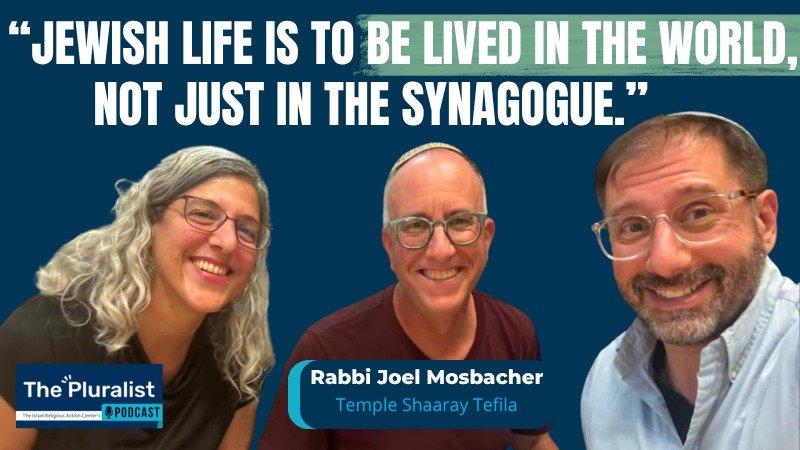
The following morning, I met with Rabbi Joel Mosbacher, Senior Rabbi of Temple Shaaray Tefila in New York City, who had been among those detained. As we were meeting, Josh arrived in Jerusalem to vote in the upcoming Israeli elections. We realized that this was an opportunity to hear Joel's firsthand account and decided, on the spot, to record a special episode of The Pluralist Podcast. We were joined by first year rabbinical students.
Joel shares what happened, from the peaceful days of harvesting olives alongside Palestinian farmers to the arrival of Israeli soldiers and police, hours in custody, and the possibility of deportation.
But as Joel himself emphasizes, this is not really a story about the activists. It is about the Palestinian farmers who face harassment and violence and who often cannot safely harvest their own olives without others coming to protect them.
This is a reality that too many people are not fully aware of. And if we care about Israel's future, we cannot afford to ignore it.
Friday, we put those same values into action ourselves. Josh and I joined an olive harvest organized by Rabbis for Human Rights in the Palestinian village of Jallud, which has faced repeated attacks by settlers. We were joined by IRAC's Legal Department Director, Ori Narov; Resource Development Director, Louis; and Rabbi Reuven Greenwald, Director of Hebrew Union College's programs for students studying abroad. Together with other volunteers, we helped Palestinian farmers harvest their olives and provided a protective presence so they could work their land safely.
For me, this was about more than harvesting olives. It was about refusing to stand by while people are intimidated and prevented from carrying out something as basic as harvesting the fruit of their own trees. And it was about showing, through our actions, that there is another Jewish voice — one committed to human dignity, equality, and justice.
One of the most meaningful parts of our conversation was Joel's description of himself as a "heartbroken Zionist."
He explained that loving someone does not mean agreeing with everything they do. And when a relationship is important to us, we have to be willing to do the difficult work of making it better.
I think this is an important message for all of us who believe in Israel as a Jewish and democratic state.
Many liberal Zionists are deeply troubled by what is happening in Israel. It can be tempting to distance ourselves, avoid difficult conversations, or simply disengage. But doing so will not help Israel become the country we want it to be.
Instead, we need to strengthen our relationships with one another, learn more about what is happening on the ground, and support those working to defend democracy, equality, and human rights.
With Israel's elections approaching, this responsibility is especially important. The future of our democracy, the rule of law, and the treatment of Palestinians are all part of the choices facing Israeli society.
Joel reminded us of something fundamental about Jewish leadership:
"Jewish life is meant to be lived in the world and not just in the synagogue."
For me, this is also what our partnership between Israeli and Diaspora Jews should be about. Not simply agreeing with one another or expressing concern from afar, but working together to make Israel a more democratic, just, and pluralistic country.
Orly Erez-Likhovski
🎧 Watch or listen to this special episode of The Pluralist Podcast:

Learn about our work
-
![]()
Advancing Freedom of and from Religion
-
![]()
Ensuring equal status for Reform and Conservative communities
-
![]()
Advancing Equality in the Public Domain
-
![]()
Advancing Racial Equality and Combatting Hate
-
![]()
Strengthening Israel’s Democracy
-
![]()
Protecting the Rights of Converts and Immigrants


-

Newsletter
The Pluralist, the weekly newsletter published by the Israel Religious Action Center, is a great way to keep informed of our recent activities
-
Podcast
Now you can listen to, read and watch Orly Erez-Likhovski as she keeps you informed, engaged and plugged in to the major issues challenging Israel today
-
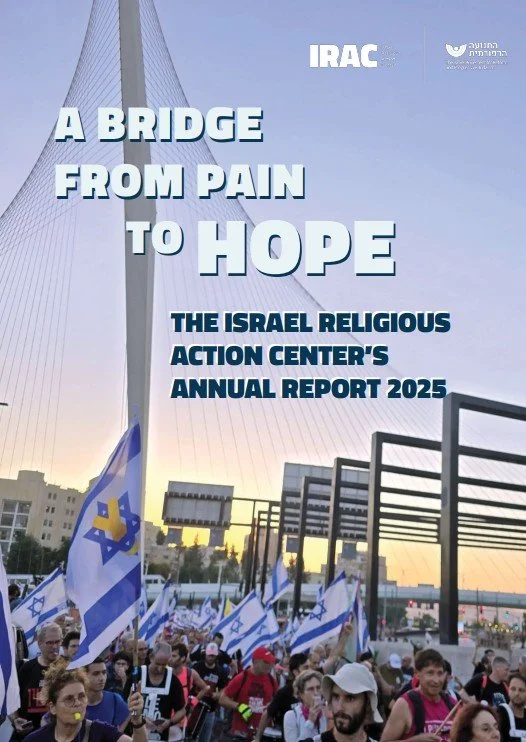
2025 was grueling, but ultimately it reinforced my belief in the power of collective faith and action. The ceasefire in October 2025 and the return of all the surviving hostages demonstrated once again that even in the most difficult circumstances, when we come together and persist, we can make enormous changes.
Orly Erez-Likhovski